Skip to content
Reaction Engineering and Applied Thermochemical Conversion Laboratory
Menu

Facilities

Experimental setups

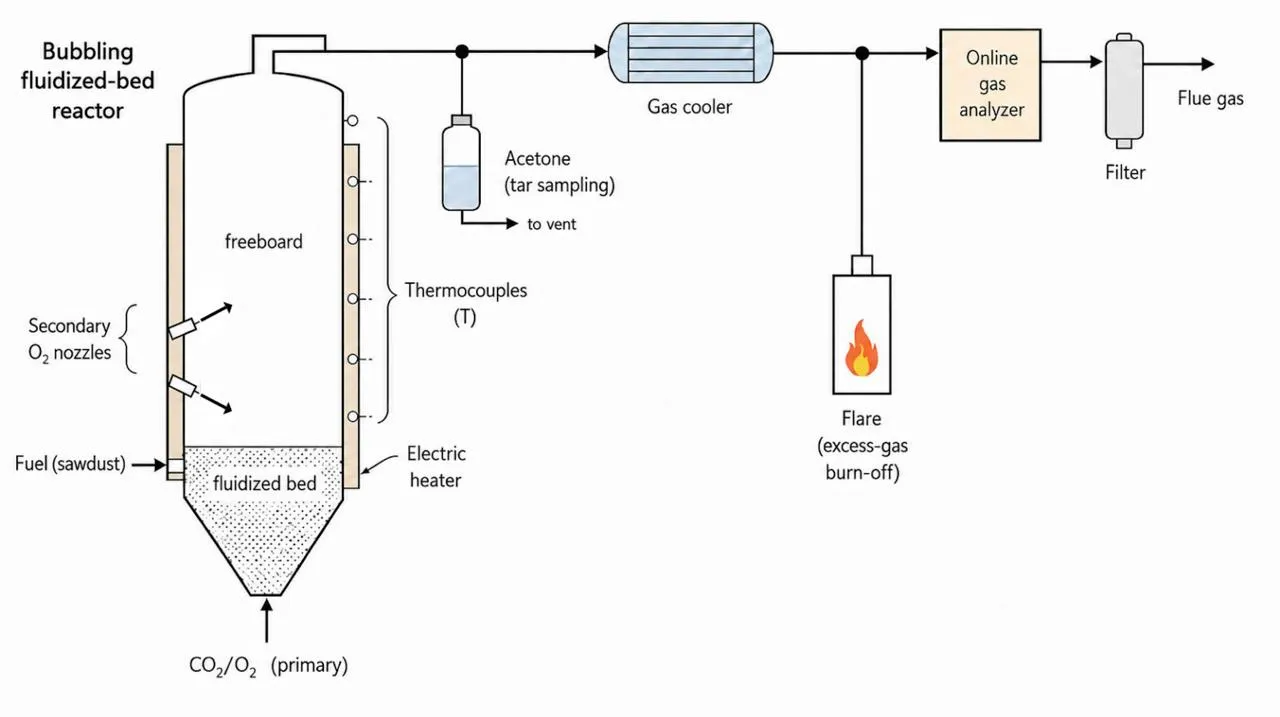
Schematic of the bubbling fluidized-bed gasifier: sawdust is fed into an electrically heated fluidized bed blown with CO₂/O₂, secondary O₂ nozzles stage the oxygen, thermocouples measure the axial temperature, and the gas passes acetone tar sampling, a gas cooler, an online gas analyzer and a filter; excess gas is burnt in a flare. Figure: Reyhan Ubadillah, 2026.

Bubbling fluidized-bed gasifier

Lab-scale bubbling fluidized bed with a silica-sand bed for biomass gasification with CO₂/O₂ mixtures, including Winkler-type staged oxygen injection through two near-bed wall nozzles. Used to measure syngas yield and composition, tar yield and the axial temperature profile.

Research area: Biomass and waste gasification
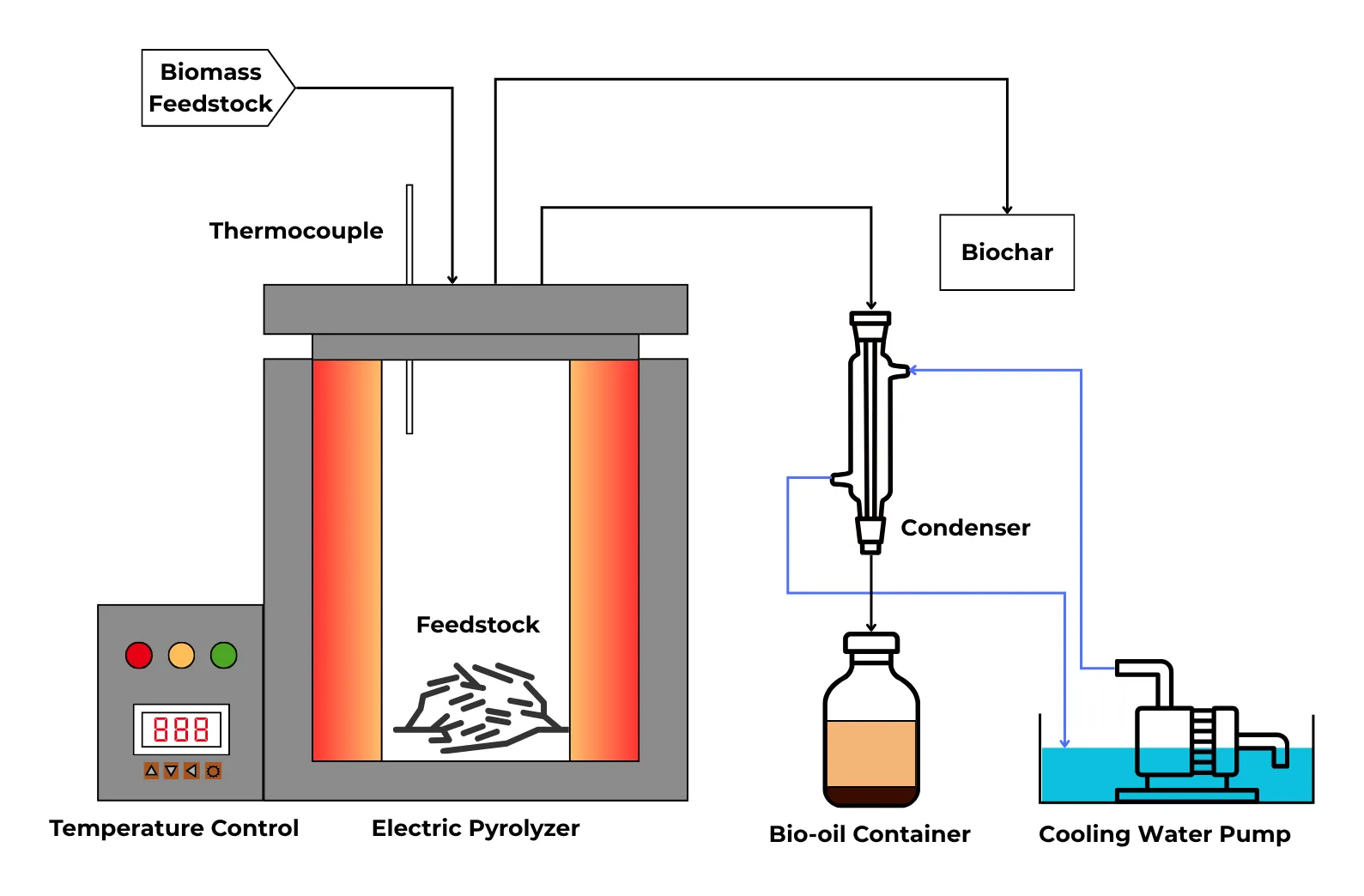
Schematic of the pyrolysis setup: an electric pyrolyzer with temperature control, a water-cooled condenser and a bio-oil container; the biochar is collected from the reactor. Figure: Bram Wiratma, 2026.

Pyrolysis and carbonization reactor

Produces biochar and bio-oil from biomass by pyrolysis and carbonization. The biochar is used as a co-gasification feedstock and as a catalyst.

Research area: Pyrolysis and biochar

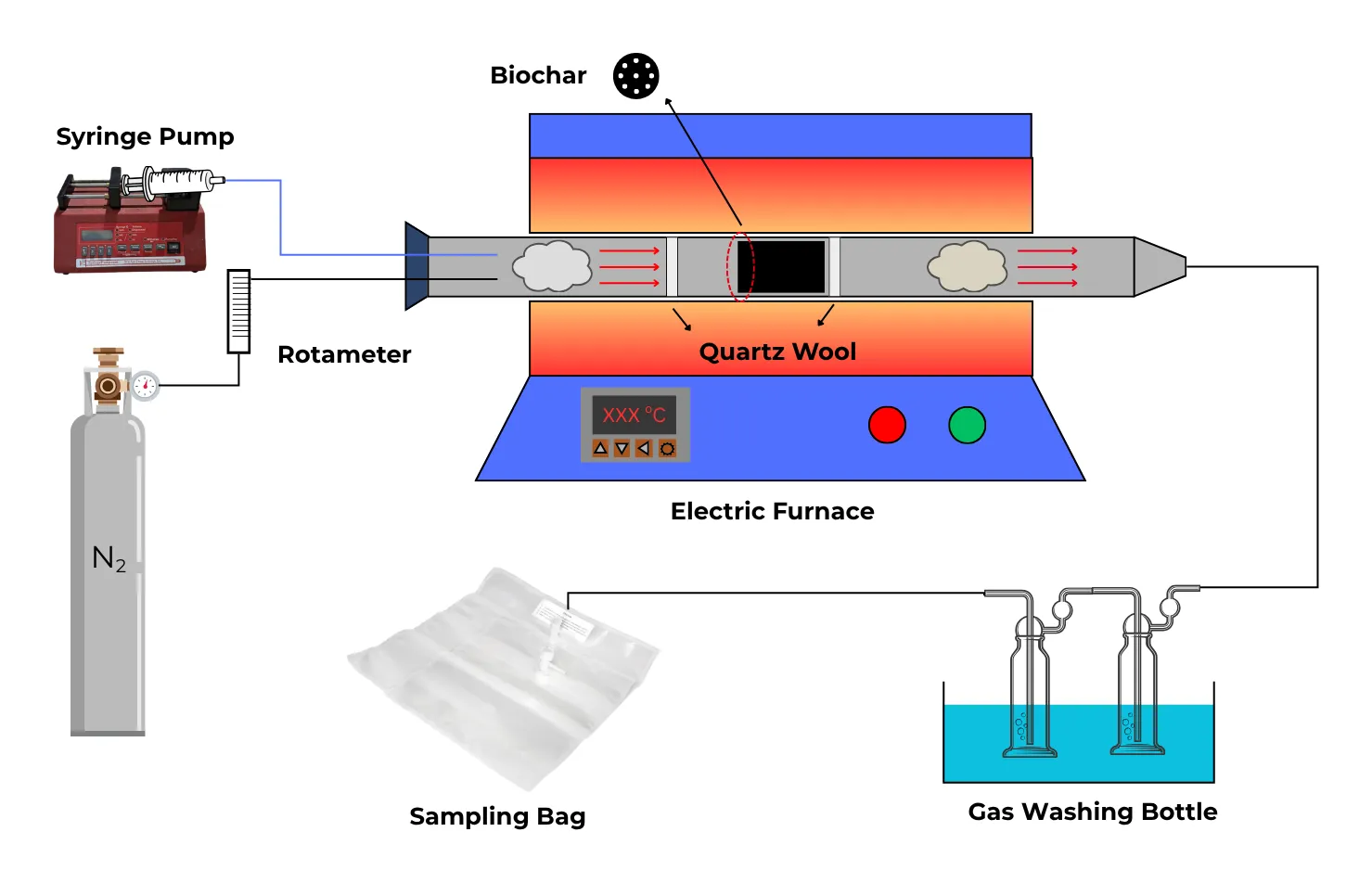
Schematic of the bio-oil reforming test: a syringe pump feeds a model compound with nitrogen from a rotameter into a tube in an electric furnace, where it passes a biochar catalyst held by quartz wool; the gas then passes gas-washing bottles into a sampling bag. Figure: Bram Wiratma, 2026.

Catalytic cracking reactor

Cracks aliphatic and aromatic bio-oil model compounds over biochar catalysts to study the syngas yield; the spent catalysts are tested as battery-anode precursors.

Research area: Pyrolysis and biochar, Hydrogen production and electrified reactors

Instruments and equipment

Simulation software

Aspen Plus
Steady-state process simulation of gasification, reforming and Power-to-Liquid plants
Aspen HYSYS
Process simulation and techno-economic comparison of fuel pathways
Aspen Process Economic Analyzer
Capital and operating cost estimation
Barracuda Virtual Reactor
CPFD simulation of fluidized-bed gasifiers