
Research
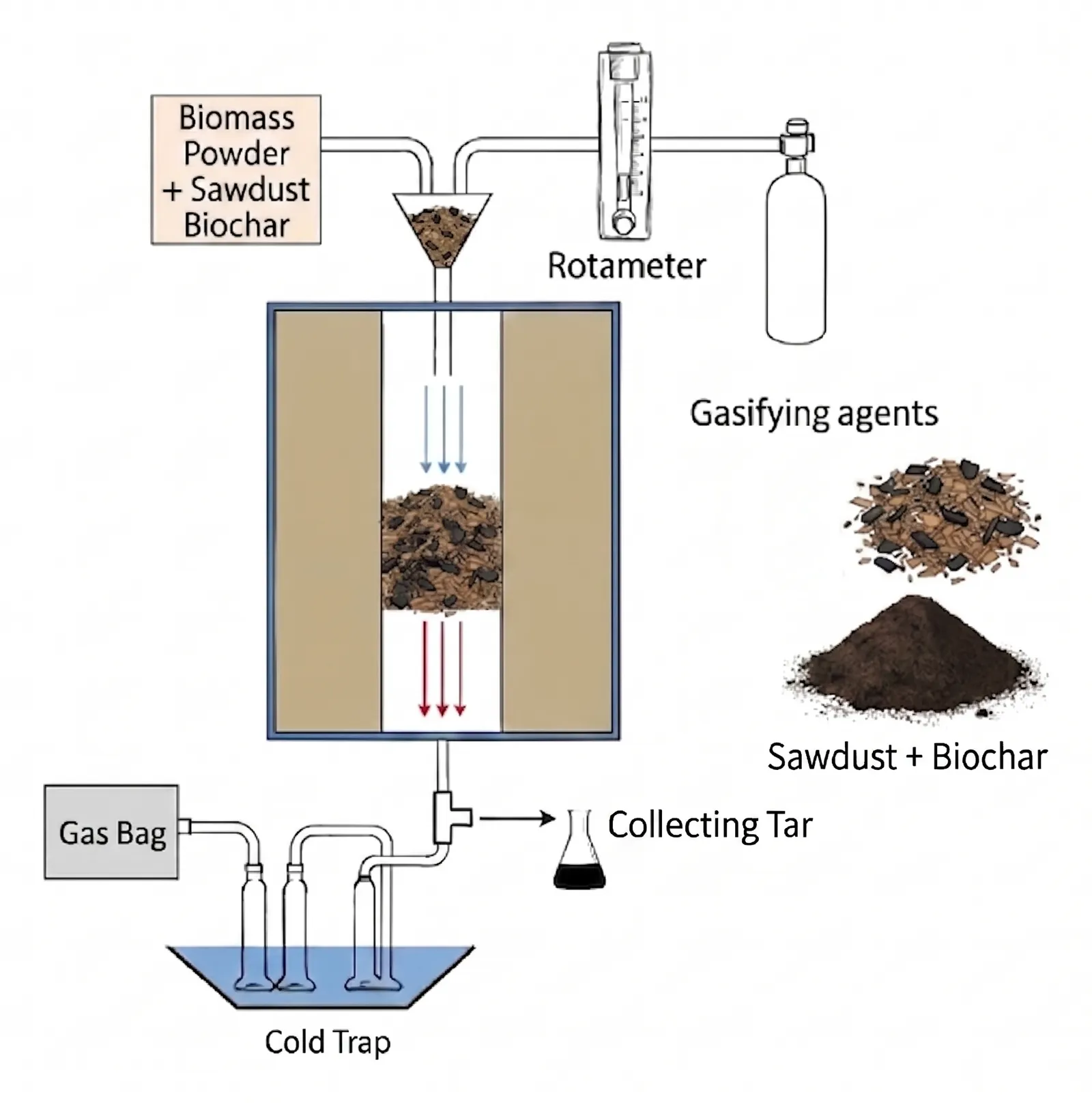
Biomass and waste gasification
Fluidized-bed gasification experiments and CPFD/CFD simulation: syngas quality, tar, staged oxygen, co-gasification with biochar, integration with industrial processes.
Current topics
- CO₂/O₂-blown bubbling fluidized-bed gasification with staged oxygen injection
- Co-gasification of biomass and biochar for high-quality syngas
- CPFD simulation of circulating fluidized-bed gasifiers
- Gasification integrated with blast furnaces and coal-fired power plants
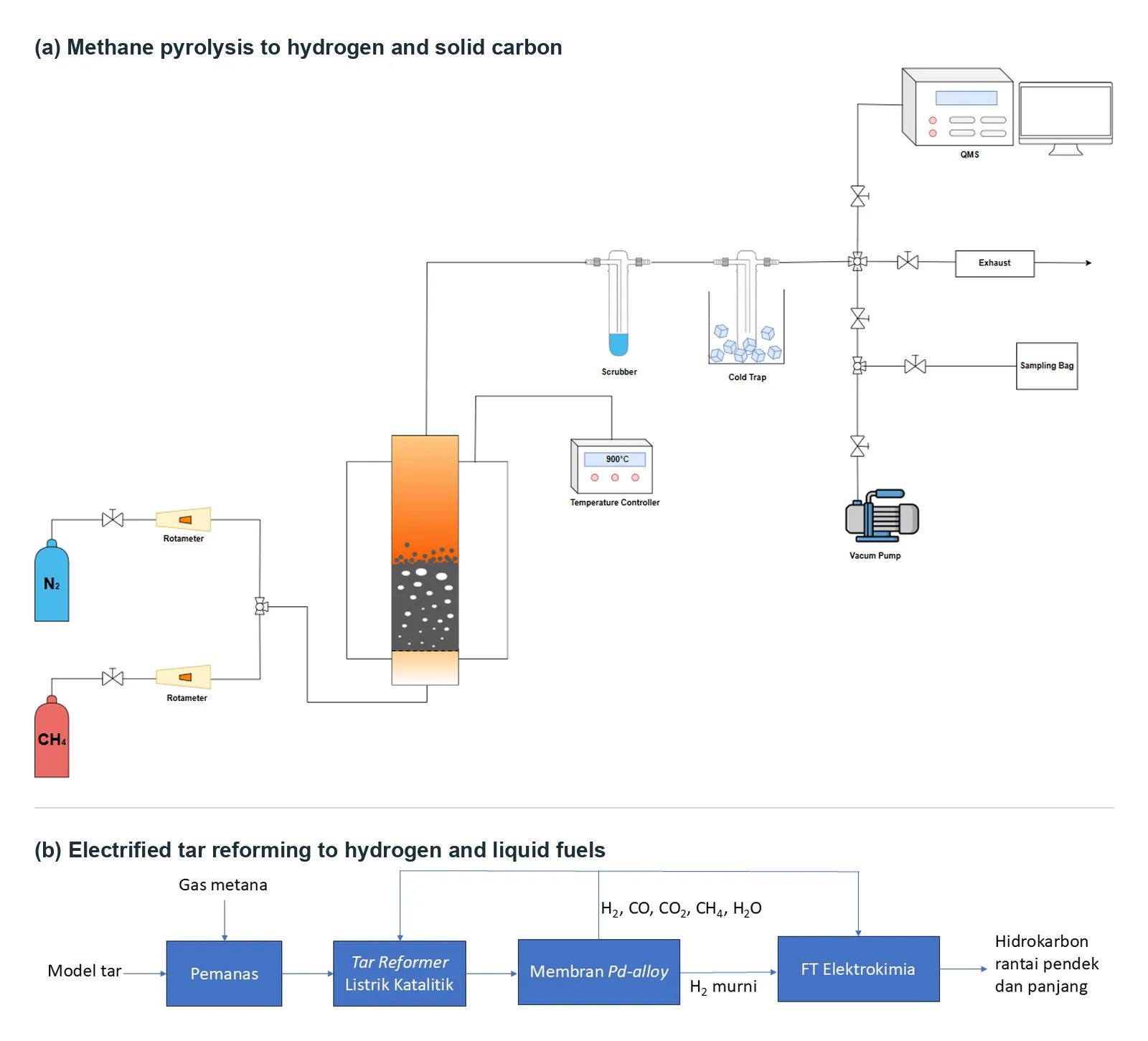
Hydrogen production and electrified reactors
Joule-heated reactors, electrified tar reforming, methane pyrolysis to turquoise hydrogen and solid carbon, bio-oil reforming over biochar catalysts.
Current topics
- Joule-heated reactors with SiSiC foam heating elements
- Electrified tar reforming to syngas
- Methane pyrolysis to turquoise hydrogen and solid carbon
- Bio-oil reforming over biochar catalysts
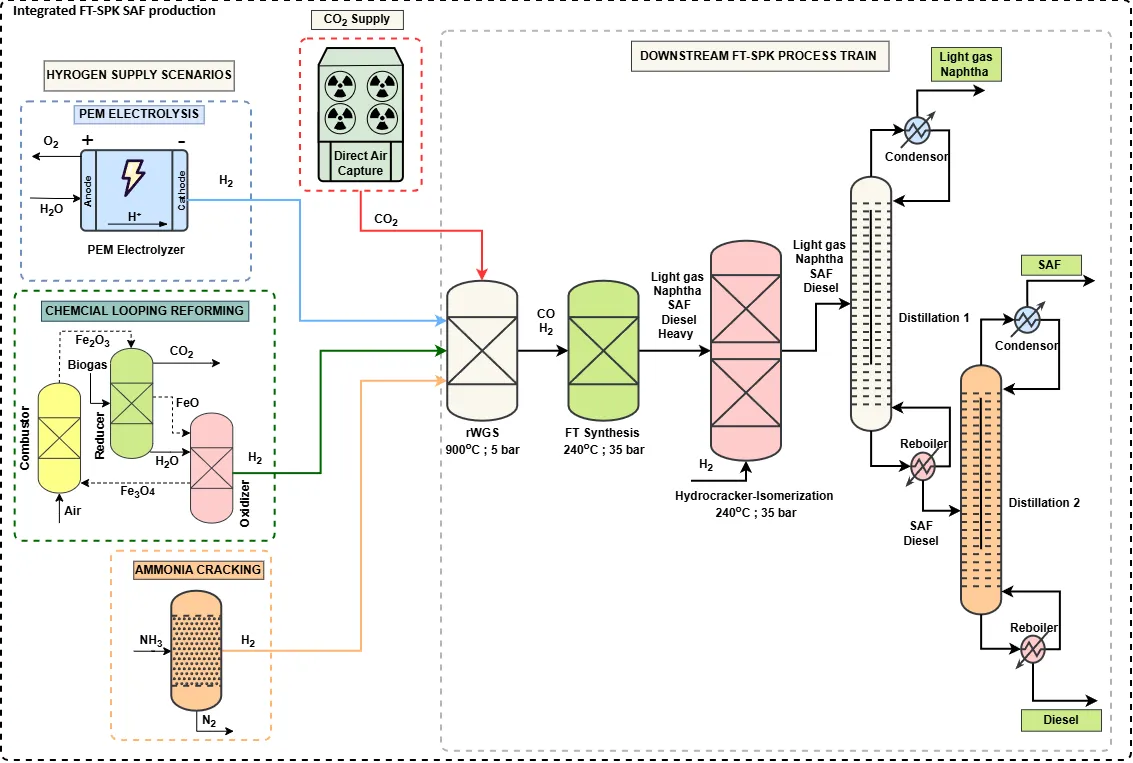
Sustainable aviation fuel and Power-to-Liquid
Fischer–Tropsch SAF routes from gasification and electrolysis hydrogen: process simulation, techno-economics and life-cycle assessment.
Current topics
- Fischer–Tropsch SAF from multi-scenario hydrogen sources
- Life-cycle and techno-economic comparison of SAF routes
- Syngas quality for SAF synthesis from biomass gasification
- Electrochemical Fischer–Tropsch for low-carbon liquid fuels
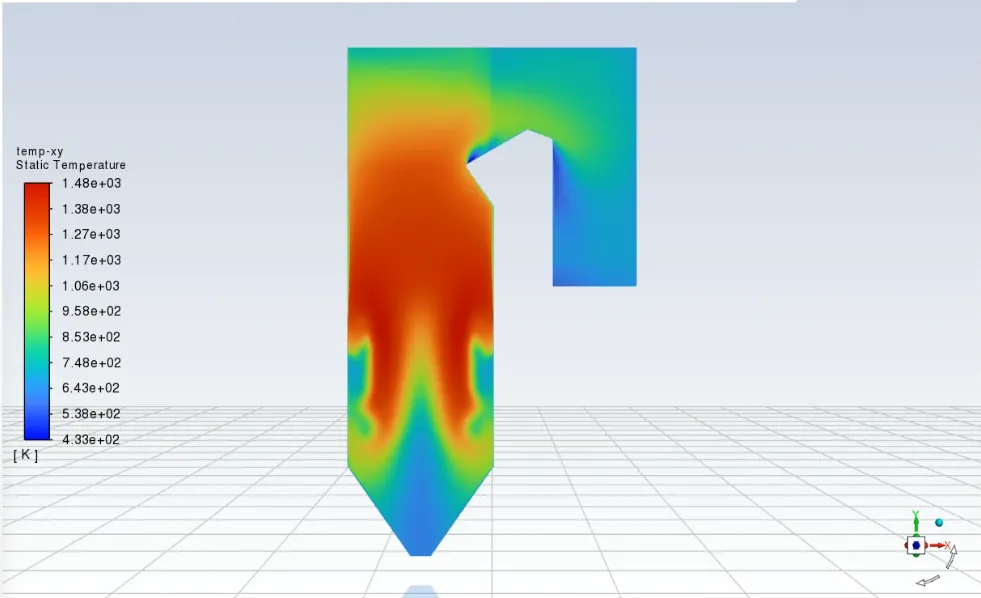
Co-firing and carbon capture in power plants
CFD of biomass co-firing in pulverized-coal boilers, syngas–natural gas co-firing, retrofitting carbon capture and gasification into existing coal plants.
Current topics
- CFD of biomass co-firing in pulverized-coal boilers
- Syngas–natural gas co-firing and tar effects
- Carbon capture retrofits for subcritical coal plants
- Techno-economics of biomass-waste gasification for co-firing
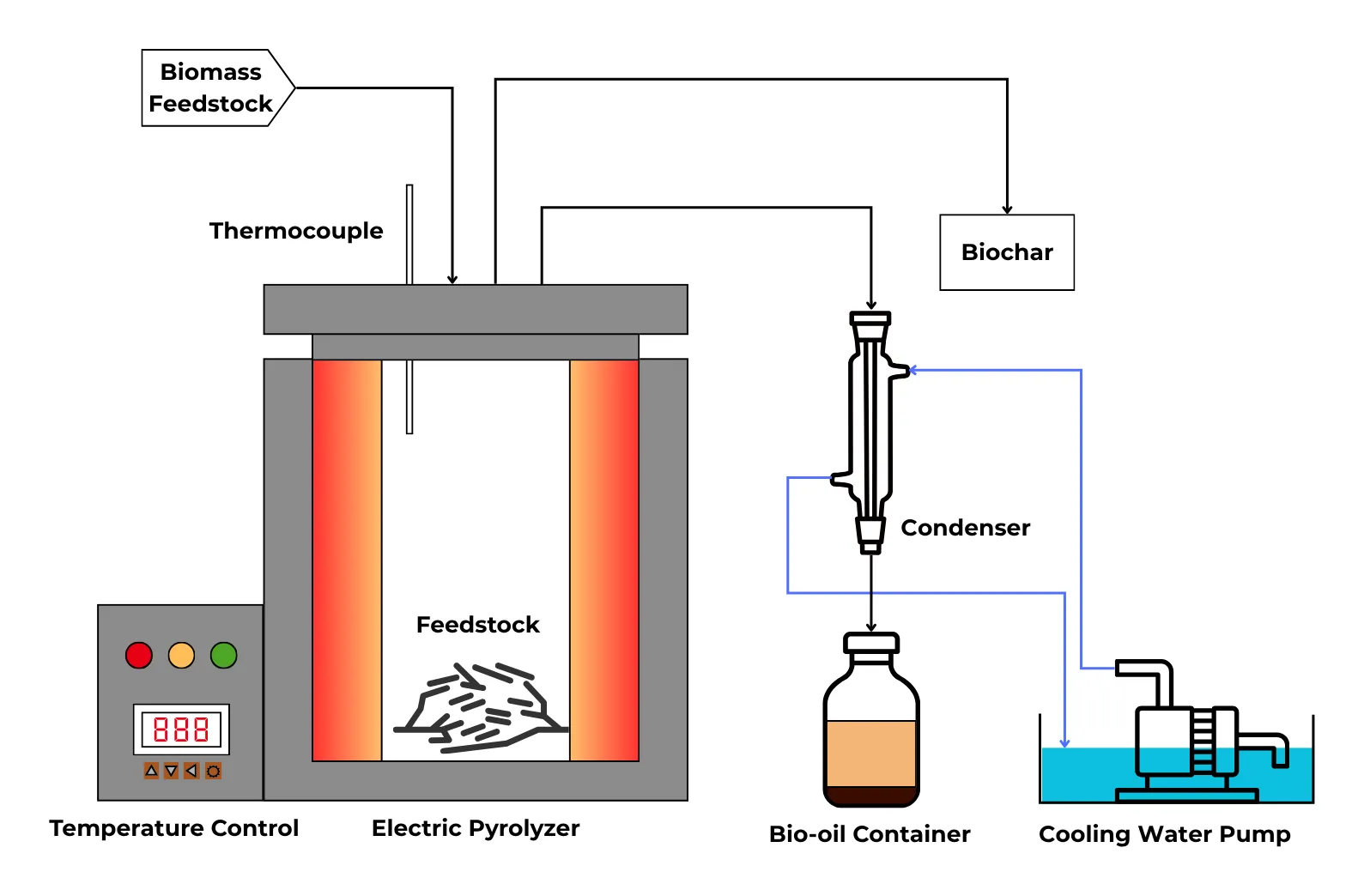
Pyrolysis and biochar
Pyrolysis of biomass and waste; biochar as catalyst, carbon material and battery-anode precursor; carbon nanotubes from plastic waste.
Current topics
- Biochar production by pyrolysis and carbonization
- Biochar as a catalyst for bio-oil reforming
- Biochar-derived battery-anode precursors
- Carbon nanotubes from plastic-waste pyrolysis